Exploring innovation, sustainability, and performance in modern building envelopes
Discover the latest facade design trends shaping modern architecture. Learn how innovative facade systems improve sustainability, aesthetics, and building performance.
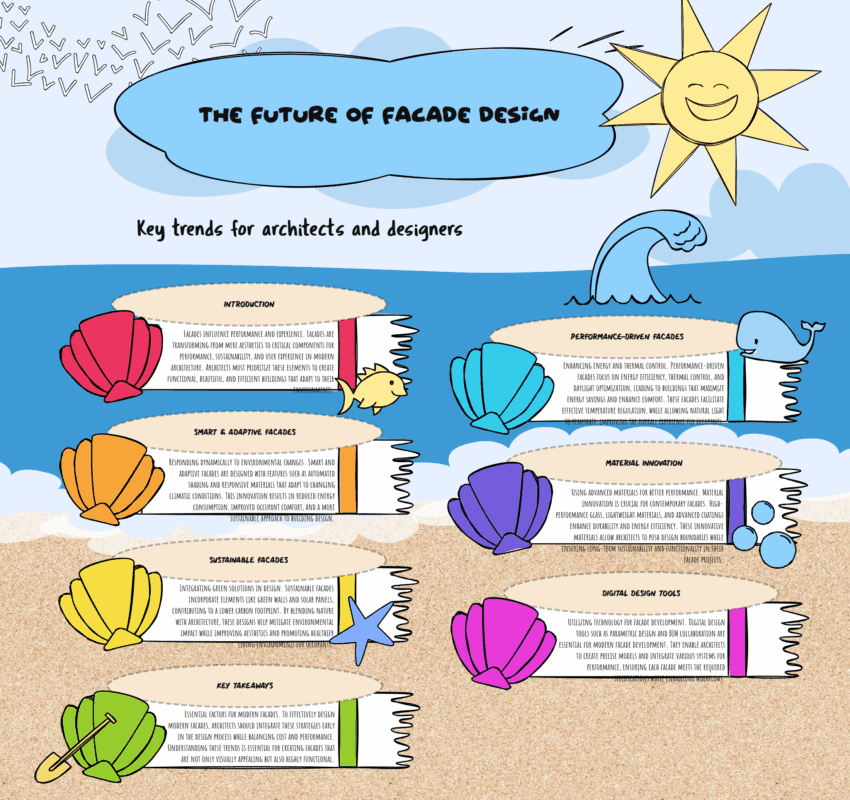
The skyline of modern cities is no longer just a display of height and structure—it reflects innovation, sustainability, and evolving architectural intelligence. At the center of this transformation lies the facade. Once considered purely aesthetic, facades have become critical systems that influence energy efficiency, indoor comfort, and the overall performance of a building.
For architects, understanding facade design trends is now essential. As buildings become more complex and sustainability becomes a priority, facade systems are evolving into intelligent, performance-driven solutions. This shift is redefining how architects approach both design and functionality.
One of the most significant trends in facade design is the move toward high-performance systems. Modern facades are expected to regulate heat, optimize natural light, and reduce energy consumption. These systems play a vital role in achieving sustainable architecture goals while lowering long-term operational costs.
A strong example of this evolution is the growing use of double-skin facades. These systems create a buffer zone between the building interior and exterior, improving insulation and enabling natural ventilation. In regions with extreme climates, they help maintain indoor comfort while reducing dependence on mechanical systems. Architects who incorporate such strategies early in the design process can significantly enhance building performance.
Another key trend shaping the future is the rise of smart facades. These systems are designed to respond dynamically to environmental conditions. For instance, automated shading devices can adjust based on sunlight intensity, reducing glare and heat gain. Similarly, responsive materials can adapt to temperature changes, improving energy efficiency without compromising design.
In some advanced projects, kinetic facades are being used to create movement and adaptability. These facades change form or orientation throughout the day, offering both functional benefits and a striking visual identity. Such innovations demonstrate how facades are evolving from static surfaces into interactive architectural elements.
Material innovation is also transforming facade design. While traditional materials like glass and aluminum remain widely used, they are now enhanced with advanced coatings and technologies. High-performance glass, for example, offers improved insulation, UV protection, and even energy generation through integrated solar capabilities.
At the same time, new materials such as ETFE and composite panels are gaining popularity for their lightweight properties and flexibility. These materials allow architects to experiment with bold designs while maintaining structural efficiency. The combination of aesthetics and performance is becoming a defining factor in modern facade systems.
Sustainability continues to drive many of these innovations. Facades directly impact a building’s energy consumption, making them a key component in sustainable design. Green facades, which incorporate vegetation, are increasingly used in urban environments to improve air quality and reduce heat buildup. Ventilated facade systems are also widely adopted to enhance airflow and minimize thermal stress on buildings.
Digital tools are further accelerating innovation in facade design. Parametric design software enables architects to create complex geometries and optimize performance with precision. Building Information Modeling (BIM) enhances collaboration between teams, ensuring that facade systems are both efficient and practical.
These technologies allow architects to push creative boundaries while maintaining control over technical requirements. As a result, the integration of design and performance has become more seamless than ever before.
However, despite these advancements, architects must balance multiple factors when designing facades. Cost, performance, and aesthetics must all be carefully considered. Advanced facade systems often involve higher initial investments, making it important to evaluate long-term benefits against upfront costs.
- Integrate facade design early in the project to avoid expensive changes later
- Work closely with facade engineers to ensure optimal performance and cost efficiency
Maintenance is another important consideration. Complex systems require proper planning to ensure durability and ease of upkeep. Designing with maintenance in mind helps preserve both performance and appearance over time.
Real-world projects across the globe highlight how these trends are shaping modern architecture. Buildings that incorporate smart technologies, sustainable materials, and high-performance systems are setting new benchmarks in design. These examples demonstrate that facades are no longer just exterior elements—they are central to how buildings function and interact with their environment.
For architects, the future of facade design lies in integration. It is no longer about selecting materials or creating patterns in isolation. Instead, it requires a holistic approach that combines sustainability, technology, and user experience.
As the industry continues to evolve, architects who embrace these trends will be better positioned to create buildings that are not only visually striking but also highly efficient and future-ready. The facade has become a defining element of modern architecture, shaping both performance and perception.
FAQs
1. What is a high-performance facade system?
A facade system designed to improve energy efficiency, regulate indoor climate, and enhance building durability.
2. Why are smart facades important?
They adapt to environmental conditions, improving comfort and reducing energy consumption.
3. How do facades support sustainability?
They reduce energy usage, improve insulation, and can integrate renewable energy solutions.
4. What materials are trending in facade design?
High-performance glass, ETFE, and composite panels are widely used in modern projects.
5. How can architects choose the right facade system?
By considering climate, building purpose, budget, and performance goals early in the design phase.
🚀 CTA (Call to Action)
If you’re an architect aiming to design smarter, more sustainable buildings, now is the time to rethink your facade strategy. Embrace innovative facade systems and position yourself at the forefront of modern architecture.
Call us at 98211 56059