Balancing aesthetics, performance, and sustainability in modern facade design
Discover how to choose the right facade materials for your projects. Learn about performance, durability, sustainability, and cost-effective facade solutions for architects.
Every architectural project begins with a vision, but it is the choice of materials that ultimately brings that vision to life. Among all design decisions, selecting the right facade materials is one of the most critical for architects. The facade is not just the outer skin of a building—it defines its identity, influences its performance, and determines how it interacts with the environment.
In today’s evolving architectural landscape, facade materials must do far more than look appealing. They are expected to enhance energy efficiency, withstand environmental conditions, and contribute to sustainable building practices. For architects, this makes material selection a strategic decision rather than a purely aesthetic one.
One of the first factors to consider when choosing facade materials is climate. A material that performs well in a temperate environment may not be suitable for regions with extreme heat, heavy rainfall, or high humidity. For example, in hot climates, materials with high thermal resistance and reflective properties help reduce heat gain, improving indoor comfort and lowering energy consumption. Similarly, in coastal areas, materials must resist corrosion and moisture damage to ensure long-term durability.
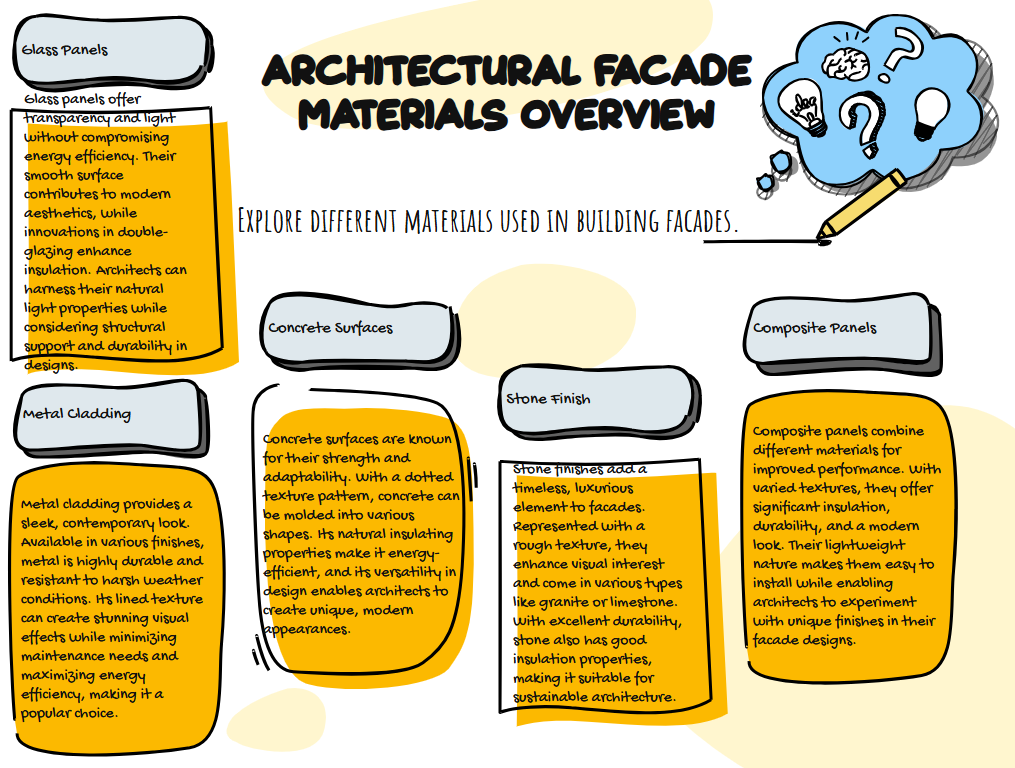
Glass remains one of the most widely used facade materials in modern architecture. Its ability to create transparency and bring in natural light makes it a favorite among architects. However, not all glass is created equal. High-performance glazing solutions, such as double or triple glazing with low-emissivity coatings, offer improved insulation and energy efficiency. These advanced systems allow architects to achieve a balance between openness and performance.
Metal panels, including aluminum and steel, are another popular choice for facade systems. Known for their strength and versatility, metal facades can be shaped into various forms and finishes, enabling creative expression. Aluminum, in particular, is lightweight, corrosion-resistant, and recyclable, making it a sustainable option for many projects. When combined with proper insulation, metal facades can deliver both durability and thermal performance.
Stone and concrete facades, on the other hand, offer a sense of solidity and timeless appeal. These materials are often used in projects that require a strong visual presence and long-lasting performance. Concrete facades, especially when finished with modern techniques, can achieve both raw industrial aesthetics and refined textures. However, their weight and installation complexity require careful planning during the design phase.
In recent years, composite materials have gained significant attention in facade design. These materials combine the benefits of multiple components, offering enhanced performance, flexibility, and reduced weight. For example, aluminum composite panels (ACP) provide a sleek finish while maintaining structural efficiency. Such materials are particularly useful in projects where both aesthetics and practicality are key considerations.
Sustainability has become a major driving force in material selection. Architects are increasingly prioritizing materials that reduce environmental impact while maintaining high performance. Recyclable materials, energy-efficient glazing, and locally sourced options are all part of this shift toward sustainable facade design. Additionally, integrating green facades—where vegetation is incorporated into the building exterior—can further enhance environmental benefits by improving air quality and reducing heat buildup.
Another important aspect to consider is maintenance. Some materials require frequent cleaning or specialized care to maintain their appearance and performance. Glass facades, for instance, may need regular cleaning to retain their clarity, while certain metal finishes may require protective coatings to prevent wear over time. Choosing materials with manageable maintenance requirements ensures long-term efficiency and cost-effectiveness.
Cost is always a factor in material selection, but it should be evaluated in terms of long-term value rather than just initial investment. High-performance materials may have a higher upfront cost, but they often lead to significant savings through reduced energy consumption and lower maintenance expenses. Architects must weigh these factors carefully to make informed decisions that align with project goals.
- Select facade materials based on climate, performance needs, and long-term durability
- Balance initial cost with lifecycle benefits to achieve optimal value
Real-world projects demonstrate how the right material choices can transform a building. From sleek glass towers that reflect the skyline to textured concrete facades that create a bold statement, material selection plays a defining role in architectural expression. These examples highlight the importance of aligning material choices with both functional requirements and design intent.
For architects, the process of choosing facade materials is not just about selecting from a catalog. It involves understanding how materials behave, how they interact with environmental conditions, and how they contribute to the overall performance of a building. This holistic approach ensures that the facade not only looks impressive but also performs efficiently over time.
As architecture continues to evolve, the demand for innovative and sustainable facade materials will only grow. Architects who stay informed about material advancements and emerging trends will be better equipped to create buildings that meet modern expectations. The right facade material is not just a design choice—it is a foundation for performance, sustainability, and lasting impact.
FAQs
1. What are the most common facade materials used in modern architecture?
Glass, metal panels, concrete, stone, and composite materials are widely used for their performance and aesthetic qualities.
2. How do facade materials affect energy efficiency?
They influence insulation, heat gain, and natural lighting, directly impacting energy consumption.
3. Are sustainable facade materials more expensive?
They may have higher upfront costs but often provide long-term savings through reduced energy and maintenance expenses.
4. What factors should architects consider when selecting facade materials?
Climate, durability, maintenance, cost, and performance requirements are key considerations.
5. Can facade materials impact building aesthetics?
Yes, materials define the visual identity and character of a building, making them a crucial design element.
🚀 CTA (Call to Action)
Choosing the right facade materials can transform your architectural projects from ordinary to exceptional. Start making smarter material decisions today and design buildings that are not only visually striking but also high-performing and sustainable.
Call us at 98211 56059