How integrated facade solutions are transforming execution, efficiency, and architectural outcomes
Discover how integrated facade solutions eliminate project delays, material mismatches, and execution risks. Learn how architects can achieve seamless facade delivery.
Behind every beautifully finished building facade lies a story that is rarely told. While the final outcome may appear seamless, the journey from design to execution is often filled with complexity, miscommunication, and unexpected challenges. For architects and developers, facade execution is not just a design task—it is a coordination challenge that can define the success or failure of a project.
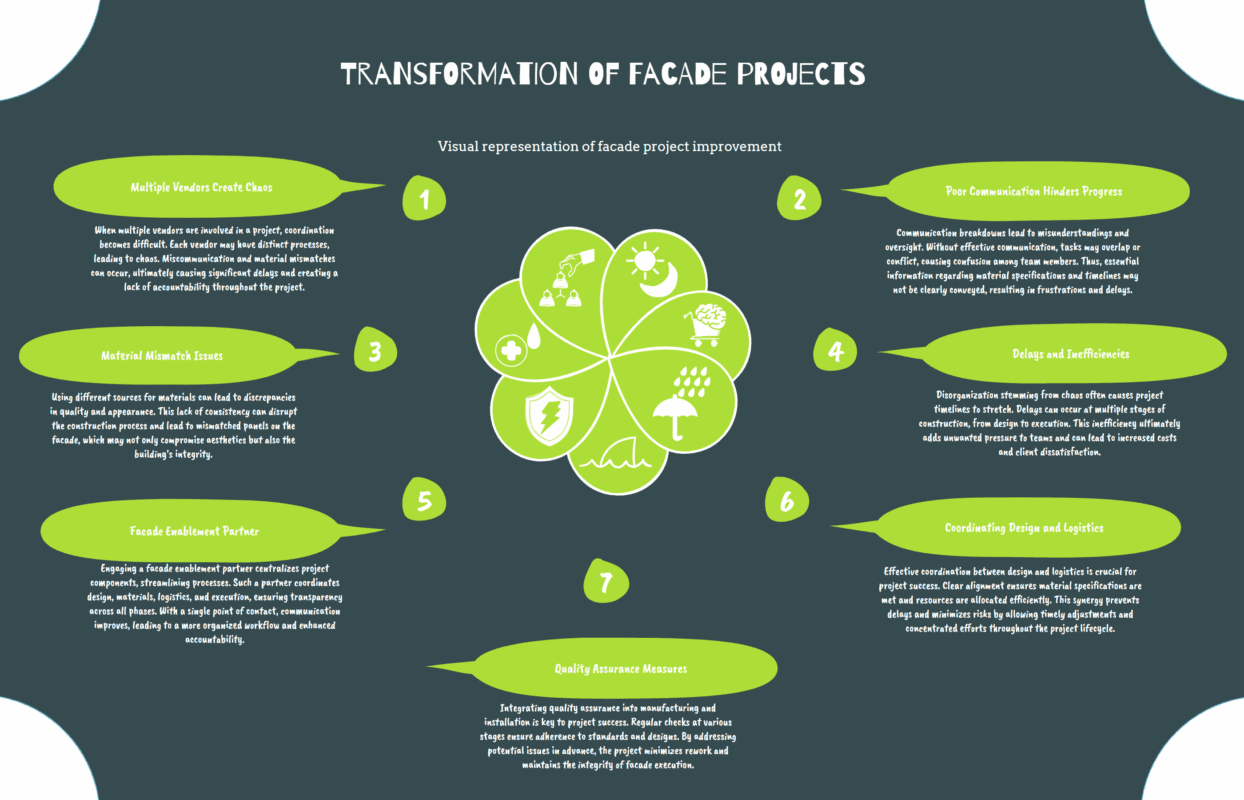
The facade industry today operates in a highly fragmented ecosystem. A single project may involve multiple vendors, suppliers, subcontractors, and logistics providers, each functioning independently. While architects carefully design every detail—from material textures to structural alignment—this vision often gets diluted as it moves through the supply chain.
This disconnect between design intent and execution is one of the biggest hidden problems in modern architecture. What begins as a precise and well-defined concept can easily turn into a compromised outcome due to material mismatches, delays, and lack of coordination.
One of the most common challenges architects face is the absence of a unified system. Instead of working with a single accountable partner, they are forced to manage multiple stakeholders. This leads to fragmented communication, where no single entity takes responsibility for the final result. As highlighted in your document, this lack of accountability creates predictable issues—design drift, procurement delays, and budget overruns.
Another critical issue is material inconsistency. Architects often specify exact finishes, coatings, and textures, but the materials delivered on-site may not match those specifications. This mismatch not only affects aesthetics but also compromises performance and durability. Over time, these small deviations can significantly impact the overall quality of the building.
Delays are another major consequence of fragmented facade workflows. When sourcing, approvals, and logistics are handled by different entities, timelines become difficult to manage. Even minor disruptions can cascade into major delays, affecting project schedules and increasing costs. As noted in the PDF, such inefficiencies often lead to extended timelines and financial strain on projects.
What makes this situation more critical is the impact on architectural integrity. The facade is not just a surface—it is the identity of the building. When execution fails to match design intent, the entire project loses its visual and functional value.
This is where the concept of integrated facade solutions becomes essential. Instead of treating facade procurement as a series of disconnected steps, a unified approach brings everything under one system. From understanding design intent to sourcing materials and managing logistics, every stage is aligned to ensure consistency and efficiency.
The idea is simple but powerful: replace fragmentation with coordination. By working with a single facade enablement partner, architects can eliminate the complexity of managing multiple vendors. This approach ensures that every decision—from material selection to delivery—is aligned with the original design vision.
A key aspect of this model is early-stage involvement. Rather than entering the process during procurement, the facade partner engages at the design stage. This allows for a deeper understanding of project requirements, including aesthetics, structural needs, environmental conditions, and budget constraints. As described in your document, this upstream intelligence ensures that all downstream decisions are precise and project-specific.
Another major advantage is end-to-end coordination. Instead of relying on separate teams for sourcing, approvals, and logistics, everything is managed under a single system. This not only improves efficiency but also creates accountability, ensuring that the project stays on track.
- Work with a single facade partner to eliminate fragmented communication and improve accountability
- Align material selection and procurement with design intent from the earliest stages
Integrated facade solutions also bring significant improvements in cost and time efficiency. By streamlining workflows and reducing redundancies, projects can achieve faster completion without compromising quality. As highlighted in your PDF, this approach leads to measurable benefits such as reduced coordination time, optimized sourcing, and improved delivery timelines.
Quality assurance is another critical outcome of this model. When materials are carefully selected and aligned with design specifications, the final facade reflects the original vision accurately. This not only enhances aesthetics but also improves durability and long-term performance.
Perhaps the most valuable benefit is risk reduction. Facade projects often face uncertainties due to supply chain disruptions and coordination failures. A unified approach minimizes these risks by ensuring proactive planning and continuous monitoring throughout the project lifecycle.
Real-world applications of integrated facade solutions demonstrate their impact clearly. Projects that adopt this approach experience smoother execution, better alignment between design and construction, and higher overall satisfaction among stakeholders. Instead of dealing with constant issues, teams can focus on delivering quality results.
For architects, this shift represents a new way of thinking about facade design and execution. It is no longer enough to create a strong design—the execution strategy must be equally robust. By adopting integrated facade solutions, architects can protect their design intent and ensure that their vision is realized accurately.
As the complexity of modern architecture continues to grow, the need for streamlined and accountable facade systems will only increase. The future of facade design lies not just in innovation, but in execution excellence.
Ultimately, the difference between a good project and a great one often comes down to how well the facade is executed. By eliminating chaos and embracing integration, architects can create buildings that truly reflect their vision—without compromise.
FAQs
1. What is the biggest challenge in facade projects today?
Fragmented workflows and lack of coordination between multiple vendors.
2. Why does design intent often get compromised?
Due to material mismatches, poor communication, and lack of accountability in the supply chain.
3. What is an integrated facade solution?
A unified approach that manages design, material sourcing, and execution under one system.
4. How does this approach improve project timelines?
By reducing delays caused by miscommunication and inefficient procurement processes.
5. Can integrated facade systems reduce costs?
Yes, by optimizing sourcing, minimizing waste, and improving coordination.
🚀 CTA (Call to Action)
If you want your facade projects to move from chaos to clarity, it’s time to adopt an integrated approach. Partner with experts who understand both design and execution—and ensure your architectural vision is delivered exactly as intended.
Call us at 9821156059