How architects can design facades that adapt to climate, improve efficiency, and enhance long-term performance
Learn how climate-responsive facade design improves energy efficiency and building performance. Discover strategies architects can use for different environmental conditions.
In today’s architectural landscape, designing a building without considering its climate is no longer an option. As environmental conditions become more unpredictable and energy efficiency becomes a priority, architects are increasingly focusing on climate-responsive facade design. This approach ensures that buildings are not only visually appealing but also capable of adapting to their surroundings.
A facade is the first line of interaction between a building and its environment. It controls how sunlight, heat, air, and moisture affect the interior. When designed with climate in mind, the facade becomes a powerful tool for improving performance, reducing energy consumption, and enhancing occupant comfort.
The starting point for climate-responsive design is understanding the local environment. Every region has unique conditions—temperature variations, humidity levels, wind patterns, and solar exposure. These factors directly influence how a facade should be designed. A strategy that works in a hot and dry climate may not be suitable for a humid or cold region.
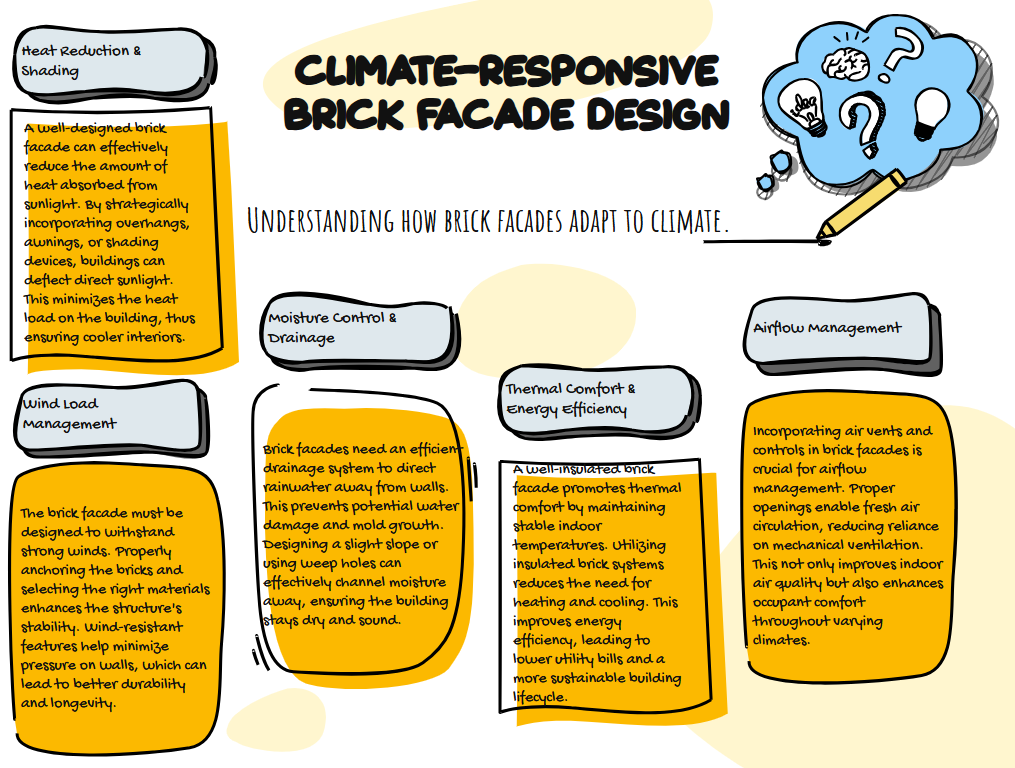
In hot climates, the primary challenge is reducing heat gain. Facades must be designed to reflect or block excessive sunlight while still allowing sufficient natural light into the building. Materials with high thermal resistance and light-reflective properties are commonly used to achieve this balance. Shading elements, such as overhangs or panel variations, can also help control direct sunlight.
In colder climates, the focus shifts to retaining heat. Facade systems must minimize heat loss by incorporating effective insulation and airtight construction. Materials that provide strong thermal performance are essential in maintaining indoor comfort while reducing heating requirements.
Humid climates present a different set of challenges. Moisture control becomes a critical factor in facade design. Without proper protection, water infiltration can lead to structural damage and reduced material lifespan. Facade systems in such environments must include drainage mechanisms and protective layers to manage moisture effectively.
Wind is another environmental factor that cannot be ignored. In regions with strong winds, facades must be designed to withstand pressure and maintain stability. Proper anchoring and structural support are essential to ensure safety and durability.
Material selection plays a crucial role in climate-responsive facade design. Materials must be chosen not only for their aesthetic qualities but also for their ability to perform under specific environmental conditions. For example, flax-cement panels and textured finishes are often preferred for their durability and resistance to weathering. These materials can maintain their appearance and performance even in challenging climates.
Orientation is another important aspect of facade design. The direction a building faces determines how much sunlight it receives throughout the day. By carefully analyzing orientation, architects can optimize natural light while minimizing unwanted heat gain or loss. This strategic approach reduces energy consumption and improves overall efficiency.
Ventilation is also a key component of climate-responsive facades. By designing facades that support natural airflow, architects can reduce the need for mechanical cooling systems. This not only saves energy but also creates healthier indoor environments.
- Design facades based on local climate conditions to improve performance and efficiency
- Select materials and systems that respond effectively to environmental challenges
Technology is playing an increasingly important role in climate-responsive design. Simulation tools allow architects to analyze environmental conditions and predict how a facade will perform. These tools provide valuable insights, enabling designers to make informed decisions and optimize their designs before construction begins.
Real-world examples demonstrate the effectiveness of climate-responsive facade design. Buildings that incorporate climate-specific strategies often achieve better energy efficiency, improved comfort, and reduced maintenance costs. These outcomes highlight the importance of aligning design decisions with environmental conditions.
For architects, the challenge lies in balancing performance with aesthetics. A facade must not only respond to climate but also contribute to the building’s visual identity. This requires a thoughtful approach that integrates technical considerations with creative design.
Another important factor is long-term durability. Climate-responsive facades are designed to withstand environmental stress over time, reducing the need for frequent repairs and maintenance. This enhances the overall value of the building and ensures its longevity.
As the demand for sustainable architecture continues to grow, climate-responsive design will become increasingly important. Architects who adopt this approach will be better equipped to create buildings that are efficient, resilient, and future-ready.
Ultimately, climate-responsive facade design is about working with the environment rather than against it. By understanding and responding to local conditions, architects can create facades that enhance performance, reduce energy consumption, and deliver lasting value.
FAQs
1. What is climate-responsive facade design?
It is an approach that designs facades based on environmental conditions to improve performance and efficiency.
2. Why is climate important in facade design?
Climate affects heat, moisture, and airflow, which directly impact building performance.
3. What materials are suitable for climate-responsive facades?
Durable materials like flax-cement panels and weather-resistant finishes are commonly used.
4. How does orientation affect facade performance?
It determines sunlight exposure, influencing heat gain and energy efficiency.
5. Can climate-responsive facades reduce energy costs?
Yes, by optimizing insulation, shading, and ventilation, they reduce energy consumption.
🚀 CTA (Call to Action)
If you want your buildings to perform efficiently in any environment, start designing with climate in mind. Create facades that adapt, respond, and deliver long-term value through smart, climate-driven strategies.
Call us at 9821156059