Understanding how facade systems influence fire performance, safety regulations, and risk prevention in modern buildings
Learn how facade design impacts fire safety in buildings. Discover materials, strategies, and best practices architects must follow to ensure safe and compliant facades.
In modern architecture, facade design is often associated with aesthetics, performance, and sustainability. However, one critical aspect that cannot be overlooked is fire safety. As buildings become taller and more complex, the role of facades in preventing and controlling fire spread has become increasingly important.
The facade is not just a protective outer layer—it can either act as a barrier that limits fire spread or, if poorly designed, become a pathway that allows fire to travel rapidly across a building. For architects, understanding the relationship between facade systems and fire behavior is essential to ensuring occupant safety and regulatory compliance.
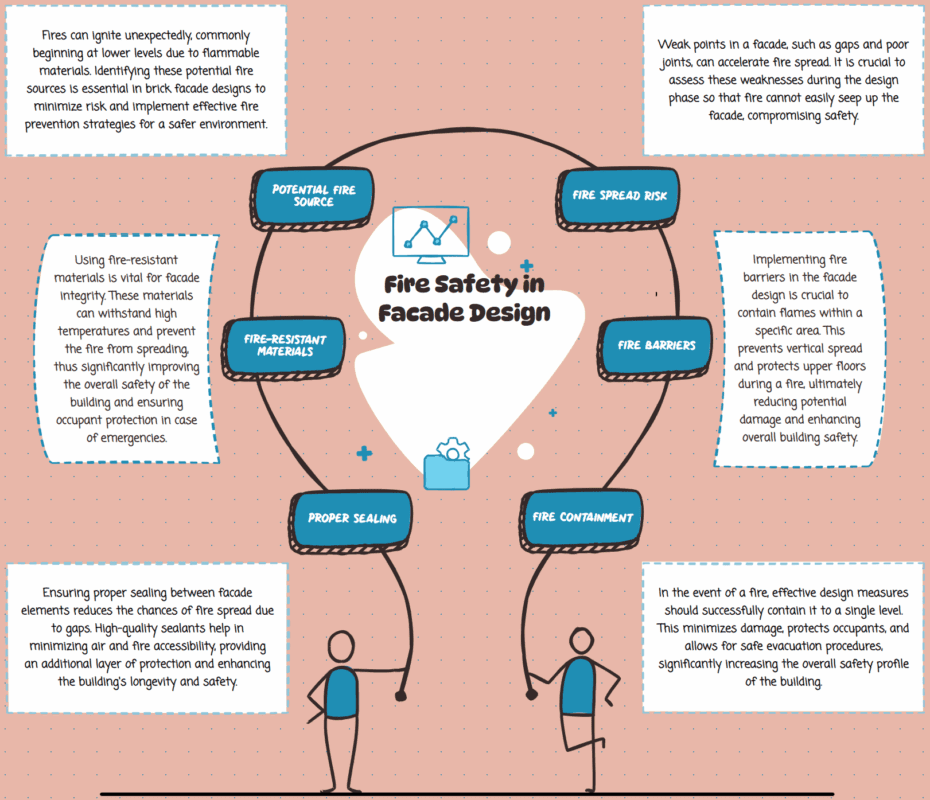
One of the primary concerns in facade fire safety is the choice of materials. Different materials react differently to fire exposure. Some materials resist ignition and slow down fire spread, while others can contribute to rapid flame propagation. Selecting fire-resistant materials is therefore a fundamental step in designing safe facades.
Facade systems are typically composed of multiple layers, including outer panels, insulation, and structural support elements. Each of these components must be evaluated for its fire performance. Even if the outer material is fire-resistant, internal layers such as insulation can pose risks if they are combustible. A comprehensive approach is required to ensure that the entire system performs safely under fire conditions.
Another critical factor is the vertical spread of fire. In high-rise buildings, flames can travel quickly along the facade, moving from one floor to another. This phenomenon is often accelerated by gaps, cavities, or poorly sealed joints within the facade system. Proper detailing and compartmentalization are essential to prevent fire from spreading vertically.
Fire barriers play a crucial role in controlling this risk. These barriers are integrated into facade systems to block the movement of flames and smoke between floors. By creating controlled compartments, fire barriers help contain the fire and provide valuable time for evacuation and firefighting efforts.
Installation quality is equally important in ensuring fire safety. Even the best-designed facade system can fail if it is not installed correctly. Gaps, misaligned components, or improper sealing can create pathways for fire and smoke. Strict adherence to installation guidelines and quality control measures is essential to maintain safety standards.
Regulations and building codes also play a significant role in facade fire safety. Different regions have specific requirements regarding material performance, fire resistance ratings, and system design. Architects must stay informed about these regulations and ensure that their designs comply with all relevant standards.
- Use fire-resistant materials and systems to reduce the risk of flame spread
- Ensure proper detailing and installation to prevent gaps and vulnerabilities
Another important consideration is testing and certification. Facade systems should be tested under controlled conditions to evaluate their performance in fire scenarios. Certified systems provide assurance that the materials and design meet established safety standards.
Real-world incidents have highlighted the importance of fire-safe facade design. Buildings with inadequate facade systems have experienced rapid fire spread, leading to severe consequences. These examples underscore the need for careful planning, material selection, and execution.
At the same time, architects must balance fire safety with other design requirements such as aesthetics and performance. This requires a thoughtful approach that integrates safety measures without compromising the overall design vision.
Advancements in materials and technology are helping architects achieve this balance. Modern facade systems are designed to meet stringent fire safety standards while maintaining high levels of performance and visual appeal. These innovations enable architects to create buildings that are both safe and aesthetically pleasing.
Collaboration is another key factor in ensuring fire safety. Architects, engineers, and contractors must work together to design and implement facade systems that meet all safety requirements. This collaborative approach ensures that potential risks are identified and addressed early in the design process.
As urban environments continue to grow and buildings become more complex, the importance of fire safety in facade design will only increase. Architects who prioritize safety will be better equipped to create buildings that protect occupants and meet regulatory standards.
Ultimately, fire safety is not an optional consideration—it is a fundamental responsibility. By making informed decisions and adopting best practices, architects can ensure that their facade designs contribute to safer, more resilient buildings.
FAQs
1. Why is fire safety important in facade design?
Because facades can influence how quickly fire spreads across a building.
2. What materials are best for fire-safe facades?
Fire-resistant and non-combustible materials are preferred.
3. How do fire barriers work in facades?
They prevent fire and smoke from spreading between floors.
4. Can poor installation affect fire safety?
Yes, gaps and improper sealing can increase fire risks.
5. Do facade systems need to meet regulations?
Yes, they must comply with local fire safety codes and standards.
🚀 CTA (Call to Action)
Fire safety should be at the core of every facade design decision. Prioritize safety, choose the right materials, and collaborate effectively to create buildings that protect both people and performance.
Call us at 9821156059